
MSc Counselling & Psychotherapy
BSc Psychology
(she/her/hers)
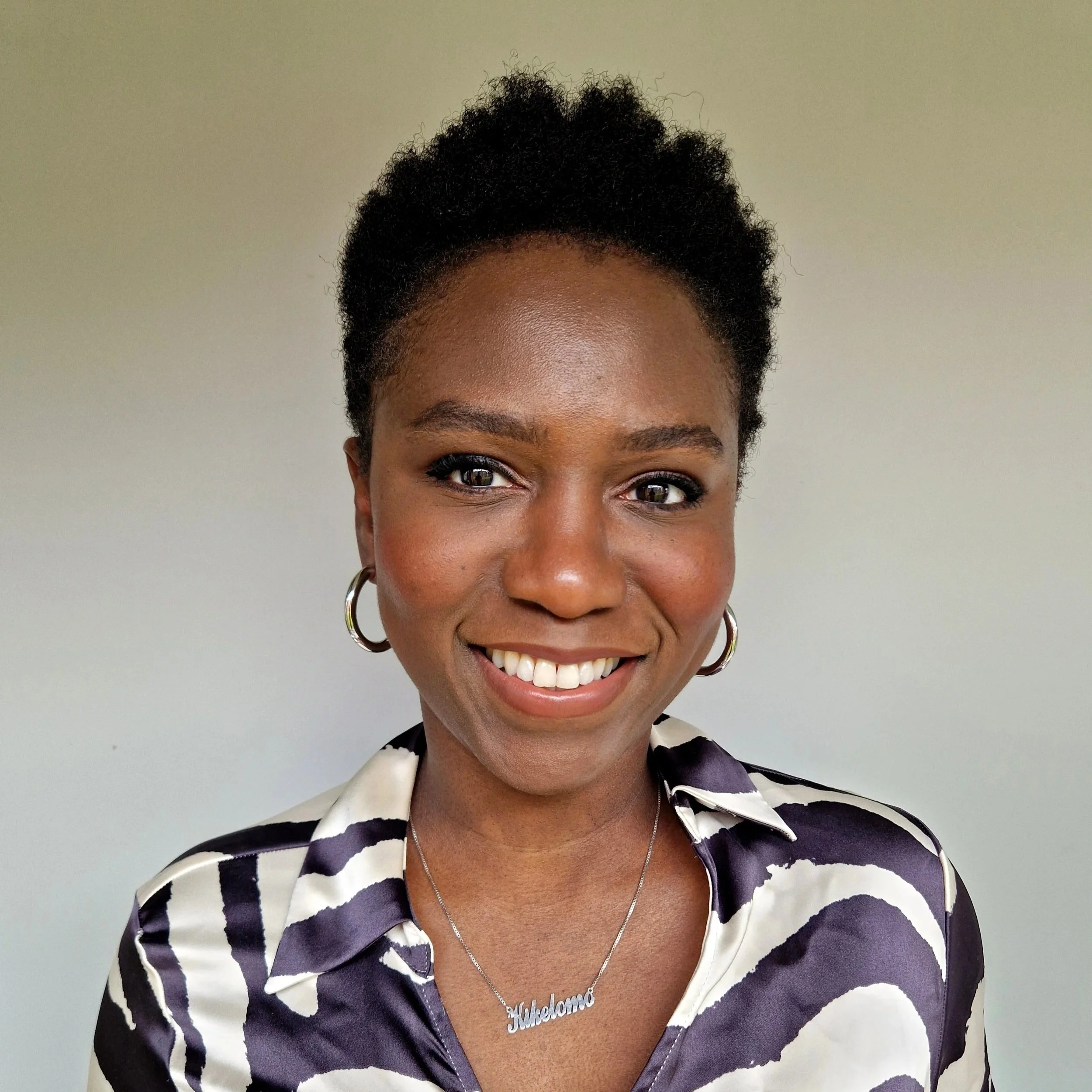
Xandra K. Ojewale-Spence
Before training as a counsellor and psychotherapist, I spent over twenty years working across different fields, including commercial retail, business ownership and care services. I've experienced the demands of running a business, working in leadership roles and balancing professional and family responsibilities.
Alongside my clinical training, my clinical experience includes supporting adults experiencing grief, anxiety, shame, relationship difficulties and significant life challenges. I've worked with people during times when their sense of certainty, identity or confidence has been shaken — sometimes while they're still trying to appear as though everything is fine. My own background has shaped my interest in the pressures people carry, the expectations they live up to and the ways these can influence how we see ourselves.
My academic background in psychology and my clinical research have also shaped my interest in depression, chronic pain, identity, strength and belonging. I've explored the idea that softness can be redefined as an act of resistance — a reminder that we don't always have to meet the world's expectations of strength to be worthy of care.
How I work
These experiences inform my work, but I know that no two people's stories are the same. I welcome adults of all genders, sexualities, racial and cultural backgrounds. You don't need to share my experiences or see the world as I do to feel that you can bring your whole self into our work together.
I bring curiosity, compassion and a willingness to understand your experience on its own terms. I won't assume I know your story because I've worked with someone in a similar situation or share aspects of your background. I'm interested in understanding what your experiences mean to you.
My role isn't to tell you what to do or who to become. It's to work alongside you as you make sense of your experiences, understand yourself more fully and explore what feels right for you. There's no expectation that you need to know where to start or be ready to change anything. We begin with where you are.
In technical terms, I work relationally and integratively, drawing on person-centred, psychodynamic and cognitive behavioural (CBT) approaches. For me, working relationally means recognising that the relationship we build in therapy matters. It offers a space where you can feel heard, explore how you relate to yourself and others, and begin to understand patterns that may have shaped your experiences. Our work is collaborative and shaped around you, rather than following a one-size-fits-all approach.
If something here resonates with you, you're welcome to get in touch and we can explore whether working together might feel right for you.
Qualifications and ongoing professional development
MSc Counselling and Psychotherapy
BSc Psychology
Anti-Racist Psychotherapy: BAATN
Adult Safeguarding Level 1 & 2: NHS England
Suicide Prevention: Grassroots
Challenging the 'Strong Black Woman' Archetype: Online Events
Working with Gender & Sexuality - Dr Sebastian Cordoba
Safeguarding and Child on Child Abuse: CPD Standards Office
The Prevent Duty: CPD Standards Office
Understanding Part One of KCSIE 2024: CPD Standards Office
Acting Professionally to Safeguard Children: CPD Standards Office
Memberships
BACP (British Association of Counselling Professionals) Individual Membership
BAATN (The Black, African and Asian Therapy Network)
Why the name, Irele?
Irele is taken from the Nigerian Yoruba word Ìrẹ̀lẹ̀ (pronounced ee-reh-leh), meaning humility.
Here, Ìrẹ̀lẹ̀ represents the quiet strength that can come from allowing ourselves to be human. It is a reminder that we do not always have to be strong, self-sufficient or carry everything alone. Sometimes, strength can be found in letting our guard down, acknowledging when we need support, and allowing ourselves to be seen as we truly are.
Humility also shapes how I approach the therapeutic relationship. I do not assume that I know what an experience means to you, simply because of your culture, race, gender, sexuality, faith, age, abilities or any other aspect of your identity. Instead, I approach each person with curiosity, openness and respect, recognising that you are the expert on your own experience.